
By Monte Wilson
When I was eight years old, I thought I had the world figured out. My world was small yet perfect ranging from my neighborhood in Maryland, my school, and the park down the street where I’d race my bike against kids I knew since preschool. I thought life would keep going the same way, same house, same friends, same Saturday morning cartoons and pancakes.
But then my dad sat us down at the dinner table and told us he got a new job. Not just any job. A position with the U.S. Embassy. The catch? It wasn’t in Washington D.C., or anywhere close. It was in Nairobi, Kenya.
At first, the words didn’t really land. “Kanya” might as well have been a made up place from one of my geography books. I didn’t know much beyond lions, safaris, and pictures I’d seen on National Geographic covers. But then he explained what it meant: we could either stay in the U.S. with our family and pass on the opportunity, or pack up everything we knew and start over in Kenya.
I remember that night vividly because it was the first time I really thought about choice, and about perception, how things seem versus what they really were.
From where I sat, moving meant losing. Losing my family, losing my school, and losing the only home I’d ever known. My dad, though, saw something different. He saw opportunity, adventure, and growth. And our family? Saw use separating.
I was eight, but old enough to realize everyone was looking at the same situation, just through different lenses.
First Impressions
When we first landed in Nairobi, I could feel the thick humid air travel through my lungs while being surrounded with a loud buzzing sound I didn’t recognize. The airport was crowded and loud, and I remember squeezing my backpack like it was the soul thing keeping me alive. I was trying to process everything at once, the languages spoken around me, the clothes people wore, and the way people carried themselves.
But the real shock came when I realized how others saw me.
In the US, I was just Monte, another black kid in a mostly black neighborhood. Nobody thought twice about it. But in Kenya people picked up right away that I wasn’t from there. My accent gave me away before I said more than a sentence. My sneakers, my slang, even the way I carried my backpack, marked me as American. Suddenly, being black, didn’t make me blend in. It made me stand out in a different way. It was strange to learn that race, which was so common back home, wasn’t the first thing people saw here. Instead, they saw nationality. This really changed the way I saw myself.
School Days
Starting at my new school is like being dropped into another planet. The classrooms looked different, the lessons were taught differently, and my classmates came from everywhere, Kenya, Uganda, India, the UK, even other American families such as mine. It was an international school ISK, which meant I was constantly surrounded by culture, food, and stories that felt completely new.
At first, I hated it. I didn’t understand the games kids played during recess. I didn’t know the local Kenyan inside jokes. Even the food at lunch threw me off, ugalli, sakumawiki, and chapati. I missed pizza Fridays and mac and cheese Mondays.
But then, something changed.
One kid, Yasin, asked me about basketball. He had seen me playing basketball after school, and he wanted to learn. I started teaching him, and suddenly, I wasn’t the outsider anymore. I was the expert. Basketball became my bridge. The thing that made me different became the thing that connected me to others with similar interests.
That’s when I started to realize perception doesn’t just shape how we see the world; it shapes how the world sees us. If I had walked around thinking I didn’t belong, that’s how people would have treated me. But when I carried myself like I had something to offer, people noticed that instead.
Learning to See Differently
Living in Kenya forced me to pay attention. To notice the small things.
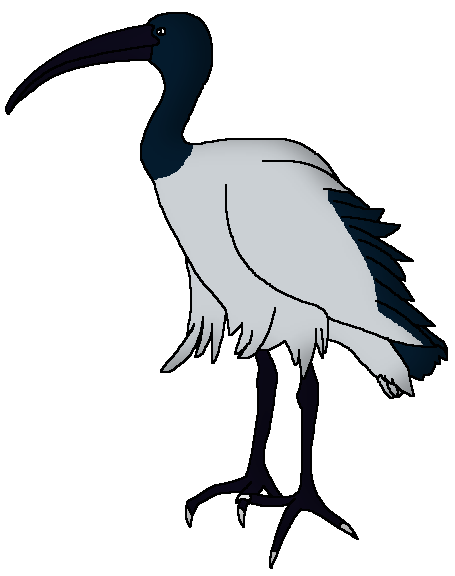
Like how mornings sounded differently, waking up from an ibis instead of alarm clocks. Or how people in Kenya valued greetings, and stopping to ask about your family before diving into business. Or how kids in the same grade as me could switch between three languages without thinking about it, while I struggle just learning the basics for Swahili phrases.

At first, I saw these differences as obstacles. But slowly, they became lessons. I learned patience. I learned that listening matters more than talking. I learned that sometimes the best way to understand a place is to stop trying to compare it to what you once had before.
Most of all, I learned that my own perception isn’t the only one.
In the US, being American was just normal. In Kenya, I realized America was an identity that carried weight. People assume things about me because of it like I was rich, that I knew celebrities, that I didn’t understand their struggles. Sometimes I just could not stand it. Other times they were very funny. But some were also very true.
But they all taught me to look at myself differently, and to ask, who am I really? Am I the kid I think I am, or the kid people see me as?
Looking Back
Now, when I think about the choice I had, staying in the US or moving to Kenya. I understand something I couldn’t at eight years old. Either decision would have been hard in their own way, but both would have shaped me into an entirely different person.
Moving gave me new eyes. It taught me that perception is powerful. That two people can look at the same thing and see completely different realities. And that sometimes, the only way to grow is to let go of how you think life should look, and look into how it physically is.
I’m still Monte Wilson. Still the kid who loves basketball, still the kid who misses pizza Fridays. But I’m also the kid who can tell you the difference between ugali and chapati, who can explain why Nairobi traffic feels like organized chaos, who knows what it’s like to be both insider and outsider at the same time.
And maybe that’s the greatest gift perception has given me, the ability to see the world, not only through my eyes but through the beliefs and perspectives of others.
Leave a Reply